Wednesday, June 8, 2016

Processing Our Coming Move (Part 2)


Time waits for no one. It steadily moves forward whether we want it to or not. Our time in Grenoble continues to dwindle. Already our friends, Djakou, Yao and Elvia, have left on trips home and will not return to Grenoble until after we have left. Their departures, as well as others who will be leaving soon, has both heightened and dissipated my emotions for our own journey. We are sad to be saying good byes already; I was preparing for this in July but we are finding we have less time with people than expected.

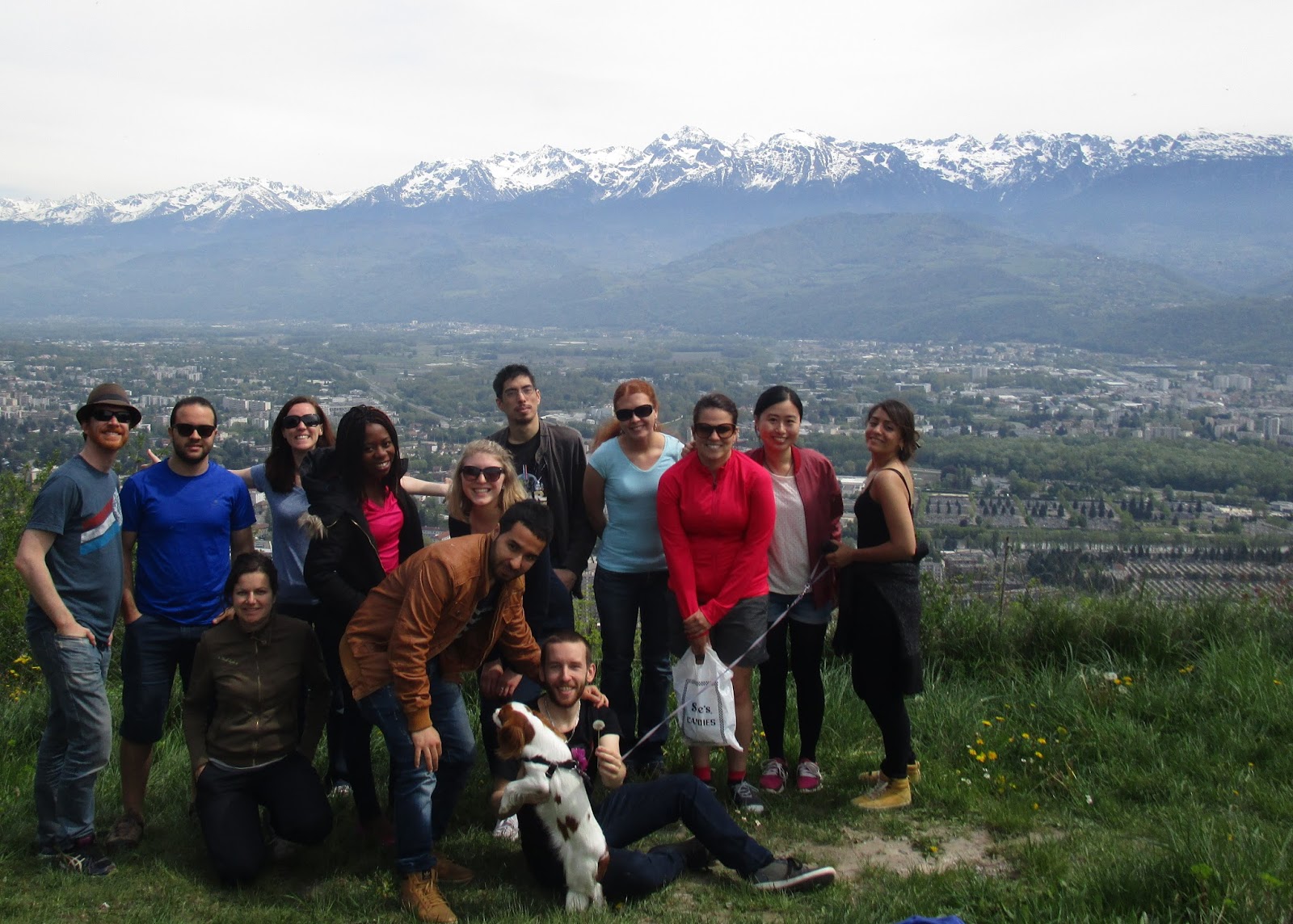
My emotions continue to be turbulent, but instead of being carried along through this season, I am choosing to engage with it. I have decided amidst the emotions to be thankful. On May 30th, the day I posted Part 1, I also created a Word document where each day I am writing one thing I am thankful for in Grenoble. There are so many reasons I have to be thankful. We have wonderful friends, a fun job, and live in a beautiful city nestled in the Alps. It has been helpful actively choose thankfulness. Rather than only being sad at the thirty-six days remaining, I am reminding myself of the incredible nine hundred and fifty-three days we have already had. In the end it will amount to forty-five days of thankfulness.

I am still riding the roller-coaster of emotions, but I’m trying to lift my hands and cheer.

Monday, May 30, 2016

Processing Our Coming Move (Part 1)

Our time living in Grenoble is drawing to a close. We leave in 45 days to be exact. That date seems far too soon. For months now, I have been "pre-grieving" our eventual departure from Grenoble. Looking at the mountains surrounding town, walking home from the boulangerie, drinking chocolat viennois with friends on Friday nights, I have been cognizant of the coming end to each of these. It has been an important process for me.

About a month ago, I moved emotionally into a time of wanting to "rip the band-aid off." The move is coming, it is going to hurt, let's just get it over with. Now, when I think about leaving, it makes my head spin. I feel sort of dizzy at the idea.

Have you noticed how emotions are not mutually exclusive? We can sometimes have this immature idea that feeling one emotion, like being sad to leave Grenoble, means I cannot simultaneously feel a "contradictory" emotion, like being excited to move back near friends and family and start a wonderful new job. Praise God that He made us emotionally complex enough to feel a myriad of emotions at the same time. I am both deeply saddened to leave Grenoble and our wonderful community here and very excited for our adventures ahead in California.

The only difference is that at this moment in time, while still in Grenoble, the emotions about leaving are much more tangible than the ethereal thoughts of what is to come. Also, our community around us now is experiencing the sadness of our leaving and it is important to identify with them in their sadness. It is always harder to be the one left than the one leaving; leaving has novel excitement, remaining only has loss. So for those of you in California, our time of rejoicing together will come, but for now I am grieving in Grenoble.

It is also hard that we will leave Grenoble with work left to be done. Granted, there will always be more friends and university students to hang out with no matter when we leave, but it is sad to go when there are so many wonderful people here now. But the idea of ever leaving a place with “mission complete” is a fantasy. Aside from very finite projects, life is never “complete.” There are still numerous things we want to do in Grenoble and in France, but this only means we will have to come back to visit.

Tuesday, April 12, 2016

Celebrate, and Celebrate Often: The Discipline of Celebration


As Christians, we should celebrate and we should celebrate often. I have three reasons why. 

The first is the Gospel: God Himself/His Son came to earth to be with us, die for us, and resurrect into new life that we too may share in eternal right relationship with God. Jesus has overcome sin and death; when on the cross He said “it is finished” (Jn 19.30) Jesus meant it. He has won the victory. We are going home to be with God. The story ends with a wedding party. This is something to celebrate, and we will do so for eternity. There is pain for now, but it will come to an end. This is reason to rejoice. Also, as a wedding now foreshadows the coming marriage between Christ and His bride, when we celebrate now it foreshadows the eternal celebration to come.

The second reason we should celebrate now is that as the body of Christ we are called to be a body that feels deeply together. We are to love and honor each other. As Paul writes in Romans 12.15 “rejoice with those who rejoice, weep with those who weep.” As a body, we should celebrate with each other. We want to share life together; the good, the bad, all of it. We want to celebrate life-events together, and we want to acknowledge who God has made each of us to be.

The final reason we should celebrate is to cultivate the discipline of celebration, which combats jealousyIn our social media age, where we share and perceive the near-perfect illusion of the lives we lead, it can be easy to slip into thoughts of jealousy when someone’s relationship status changes to “engaged” or we see pictures from our friend’s vacation to Hawaii. We should be celebrating these milestones in each other’s lives. Yes, seeing others get the things we long for can stir up envy and resentment, but we do not have to be controlled by these emotions. Instead of dwelling in jealousy, we can thank God for the blessing in another’s life. Celebrating in these moments can be difficult, but with practice we can cultivate this discipline. I want to be someone who will throw you a party when you get what I deeply desire.

What are some ways we can celebrate more? How can we honor each other? We can celebrate each other by acknowledging our love for each other. We can freely and frequently share how others help and encourage us. We can say what we enjoy about each other and what gifts, talents, or character each other has. I am a big fan of words of affirmation, but maybe acts of service, gifts, or time spent together are better ways of communicating what we feel. How do you like to be honored?

I think various cultural events are great occasions to celebrate together. Birthdays, weddings, Christmas parties and graduations are all wonderful opportunities to have fun and to commemorate life together. What do you do to celebrate the friends and family in your life? Is it something you can do more often?

Friday, March 25, 2016

Novelty and Wonder

Novelty and Wonder

It is amazing how fleeting novelty is. Something which can completely captivate our minds one day may be found to have lost all allure by the next. It seems frequency and normalcy erode our enjoyment of the things around us. I was struck by this notion a few days ago when, walking home from the tram station, I passed by this house with its enchanting tower. How fun would it be to live in a house like this? Can you imagine having an office within the tower and looking out the window at the French Alps?

For you, who do not see this tower regularly, hopefully the novelty of such a house is still intriguing. For me, the initial wonder has faded with time. As I walked by this house with the tower, I realized that the wonderfulness of the house has not changed; I have just become used to seeing it. But when I made the conscious choice to notice the house, I found myself once again marveling at how cool this old building is.

The novelty of something is temporary, and essentially a passive response to something new piqued my interest. In contrast, to marvel or be awed by something without the aid of novelty, is an active choice. While regularity tries to trade awe for normalcy, I can choose to maintain my wonder. The marvelous nature of something is intrinsic to itself and is not affected by my thought or perceptions. A sunset is beautiful, regardless of the presence of observers.

The world that God has created around us is amazing. Not only that, but it is incredible what God has done to save humanity from ourselves. We remember Jesus’ death on the Cross and His triumphant resurrection, and we are humbled by His work. Our God is good and He does wondrous things. We can sing of His glory from now until eternity for all that He has done.
                        
In our human frailty, we can forget how awesome our God is. I remember as a child in church getting bored with people always talking about the Cross or Jesus. My childish response came from immaturity and lack of understanding. It is right for me to be awed by my God. Perhaps the novelty of Christ’s work has worn off, but my wonder only grows.

As children of God, we are called to the discipline of wonder. Our God, His creation, and His redemptive work are eternally awe inspiring, and cultivating our awareness of this helps us clearly see them. We glorify God when we respond in awe to His work just as any artist likes to see others enjoy his or her creativity.


When did you last marvel at God for who He is? How do you see His wondrous character illustrated by the world around you?

Tuesday, February 2, 2016

Thoughts on Heaven: Stories in Heaven


People love stories. While styles and story structures change between different cultures and eras, the act of creating fiction transcends these times and places. Telling stories, like music or language, is one of the things which makes us human; it’s a part of who we are.

As the final question in my Thoughts on Heaven posts (part 1. and part 2), what will stories be like in Heaven? In Heaven we will be made perfect, we will at last be fully sanctified, but how will this affect the ways we tell stories? What will story structure be like then? Will we still see characters venture down the hero’s journey? Stories now are based on overcoming a conflict: an evil king, personal failure, a character flaw, but how will this be different in the unchanging state of Heaven? If we are no longer being transformed in nature (we will continue to learn, develop, and discover), will we find another way to create plot and story? Will conflict as the foundation for stories be replaced by something else? We have no way of knowing what stories will be like, but telling stories is such a part of who we are that surely it will continue on into eternity.

Another question I have is: will our stories from this age still be enjoyable? How will we, once in our final glorified state, relate back to our current tales about personal growth and overcoming an obstacle? Will our stories about imperfect characters, fighting evil or discovering who they are, be irrelevant to perfected us in Heaven? Or will our current stories be like children’s books which we have outgrown but still have fond memories of? And how will we relate to our memories of this life?

Will our perfection prevent us from relating to our imperfect selves now? Will our current struggles be alien to us in Heaven? I cannot imagine so, and that gives me hope both for my memories of this life and the stories we now tell. I am no longer nine years old, but I still appreciate my memories from when I was nine, and even when made completely whole these fallen earthly memories will forever be a part of the story of who I am.

Just like our memories, perhaps our modern stories will no longer inspire us toward who we can be (maybe they will somehow?), but they will still remind us of who we were and where we have come from. There is still great power in this.